The Focal-Point Myth: A Garden Does Not Need One Star
A garden without one focal point can still feel composed. Learn how to balance quieter details, connect planting and materials, and calm visual competition.
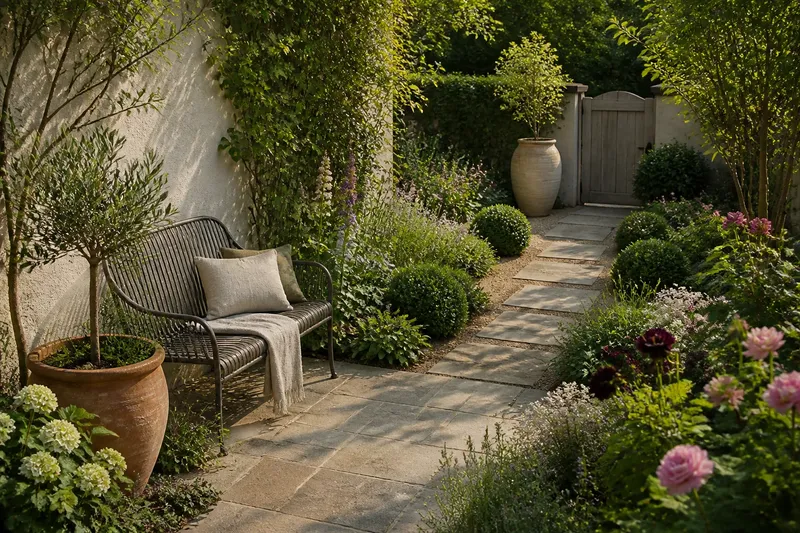
Does a garden need one bold feature to feel finished? A garden focal point can direct attention, but no single object has to dominate. A pale pot, a branching shrub, and a glimpse through a gate can each hold interest when they serve different roles in the design.
Start by asking what feels out of place: a bright object that overwhelms its setting, details that seem unrelated, or a view with nothing to hold the eye. Make one considered adjustment before buying anything new. The aim is not to eliminate focal points, but to make their relationships feel intentional.
Garden focal points without a star
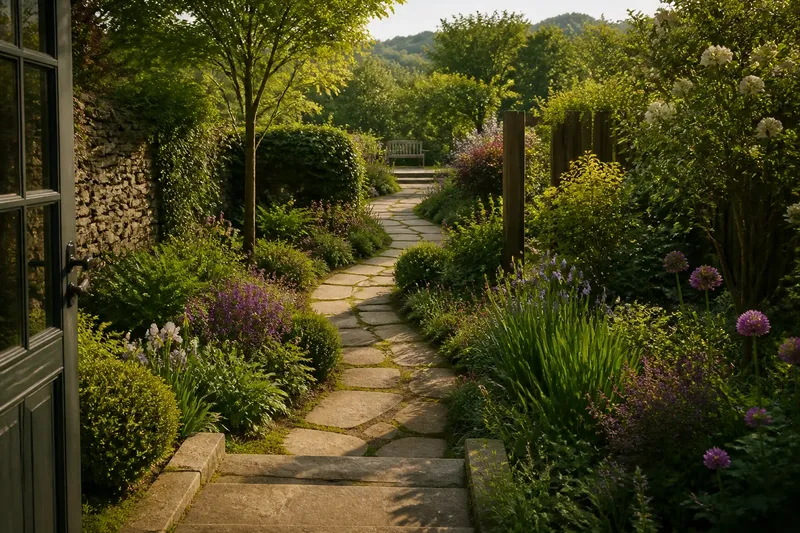
A focal point is anything that catches the eye. It could be a strong plant silhouette, a change in paving, a seat against a quiet wall, or a view framed by foliage. A garden can offer several such moments without ranking one as the permanent star.
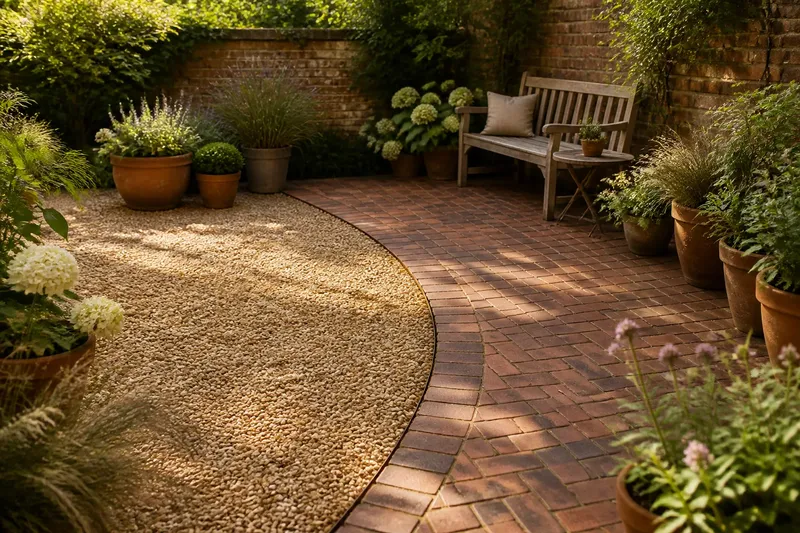
Think about how design elements work together rather than assigning each one a separate spotlight. A repeated leaf shape, a shared material, or a path that leads toward a planted corner can connect distinct details. This makes the design feel coherent without relying on a sculpture or specimen tree as its centerpiece.
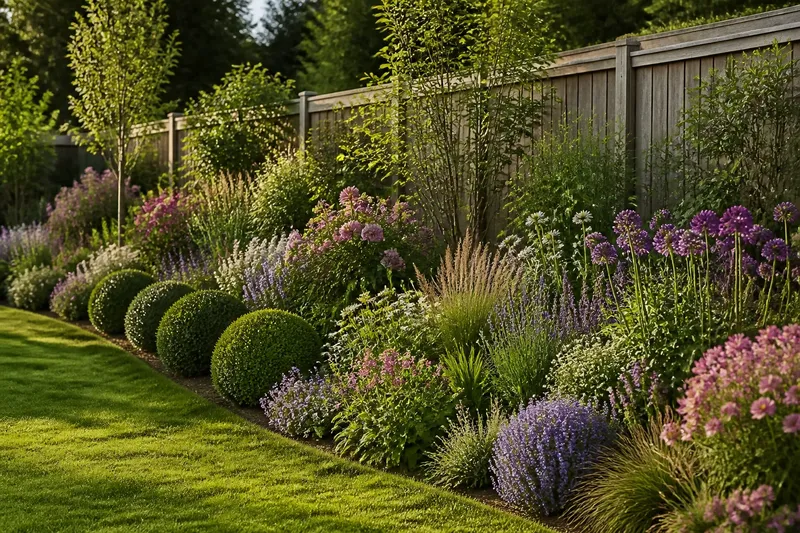
Consider the garden's character, too. A formal courtyard might use clipped shapes and repeated stone, while a loose cottage border can link moments through related foliage and a consistent palette. Borrowing a feature simply because it is fashionable can leave the garden feeling less like itself.
When one feature dominates
A feature may overpower its setting because it is large, high-contrast, or isolated against an empty background. Its visual weight also depends on what surrounds it: a bright planter can seem stronger beside subdued foliage than among varied flowers.
Before moving or replacing anything, decide whether the feature itself is the problem or whether its surroundings need adjustment. Try this sequence:
- From the kitchen window or patio door, identify the first object you notice. If it is the intended point of interest, leave it; if not, consider softening its background or position.
- Check whether nearby plants, colors, or ornaments compete with it. If they do, simplify one small area; if they do not, keep the current arrangement.
- Look at the feature from the path or seat as well. If it feels too dominant there, move it toward an edge; if it feels balanced, do not relocate it solely for variety.
- After an adjustment, look again from the same places. If the feature and surrounding planting are both easy to read, stop; if not, change a different element rather than adding another object.
Say you have a tall, glazed planter beside a bench, and it draws attention away from the border behind it. Move the planter near a side gate, then place a smaller pot with a related color beside the bench. The expected result is a clear point of interest by the gate and a quieter transition near the seating; if the smaller pot still competes, remove it rather than adding another echo.
When details compete
Several elements may demand attention at once: vivid flowers, glossy foliage, patterned paving, bright containers, and decorative objects. The issue is not simply how many details are present, but whether they all have the same visual intensity and role.
Separate broad shapes from close-up details. Let foliage, a wall, or a large container establish the overall composition; reserve smaller ornaments and intricate textures for places where someone can notice them at close range. If the whole scene feels busy, remove or store one item before changing the planting.
- Check the main view for several equally vivid objects; if they compete, move one out of sight, but if one clearly leads, keep the rest.
- Check whether small ornaments are scattered across separate surfaces; if they are, group a few together, but if the arrangement already reads as one moment, leave it.
- Check whether patterned paving and bold containers pull attention in different directions; if they do, quiet one element with a simpler neighboring surface or pot, but if they work together, make no change.
- Check whether a strong flower color repeats in nearby planting; if it does not, introduce a related foliage or flower note only if the contrast feels abrupt, but if the colors already sit comfortably together, do not add another accent.
- Check whether every container is on display; if the group feels crowded, store one or rotate it out, but if each pot has a clear place, keep the collection.
- Check whether a bare background makes an object look unusually stark; if it does, consider a suitable plant or quieter surface nearby, but if the contrast is intentional, preserve it.
It is not worth buying matching ornaments or repeating every color throughout the garden just to create unity. A few useful connections usually do more than a collection of coordinated accessories.
Connecting separate details
A garden without a dominant feature can still feel aimless if its details have no relationship. Look for an existing connection in form, color, texture, or material, then repeat it selectively. A rounded leaf might echo the curve of a pot; timber edging might relate to a bench nearby.
Imagine a narrow courtyard with a dark metal chair, a terracotta pot, and a pale wall, all of which feel unrelated. Keep the chair and pot, then add a small terracotta-toned detail in a planter near the entrance. If that echo makes the objects feel connected without adding visual clutter, keep it; if it draws attention to itself, remove it and rely on the shared contrast between metal, clay, and wall instead.
Keep repetition loose. If every corner uses the same plant, color, and material, the garden can feel overly uniform. A few echoes are enough to suggest that separate details belong to the same place.
Interest at different distances
Fine textures and small ornaments may disappear from a window, while a large object can feel overpowering up close. Give each part of the garden a job suited to how it is seen: broad plant forms and clear contrasts for distant views, leaf texture and smaller details near a path, seat, or entrance.
Check both the indoor view and the route through the garden. If a window view looks flat, adjust the outline of a plant group or the background rather than adding a conspicuous object. If the view from a bench feels bare, place a modest detail nearby only if it has room to be noticed; otherwise, let the planting provide the interest.
Questions about garden focus?
Can a garden have no focal point?
It can have no single dominant focal point while still offering several places for the eye to rest. Repeated shapes, varied textures, and clear relationships between details can make the space feel composed.
How many focal points suit a small garden?
There is no fixed number; begin with the views you actually use and the details already present. If several objects compete from one spot, give them different roles or remove one; if they read as a connected arrangement, keep them.
Does every garden need a specimen plant or sculpture?
No. A distinctive shrub, textured surface, or framed glimpse through foliage can provide interest without a purchased statement piece. Choose an object only if it suits the garden and gives you a reason to keep it.
How can I tell if details are competing?
From a doorway or window, notice whether your attention keeps jumping between equally vivid objects. Temporarily move one bright item; if the view becomes easier to read, keep the simpler arrangement, and if it feels empty, return the item or try a quieter adjustment elsewhere.
A quieter garden rhythm
A garden focal point does not have to be a single star. Connect existing details through a few repeated forms or materials, and let their scale and placement determine how much attention each receives. If the garden still feels unsettled, change one thing at a time and keep the version that makes the space easier to read without adding unnecessary decoration.