From Gravel to Brick: What a Garden Surface Says
Garden surface design can make an outdoor space feel relaxed, settled, or crisp. Compare gravel and brick by character, use, pattern, and edges.
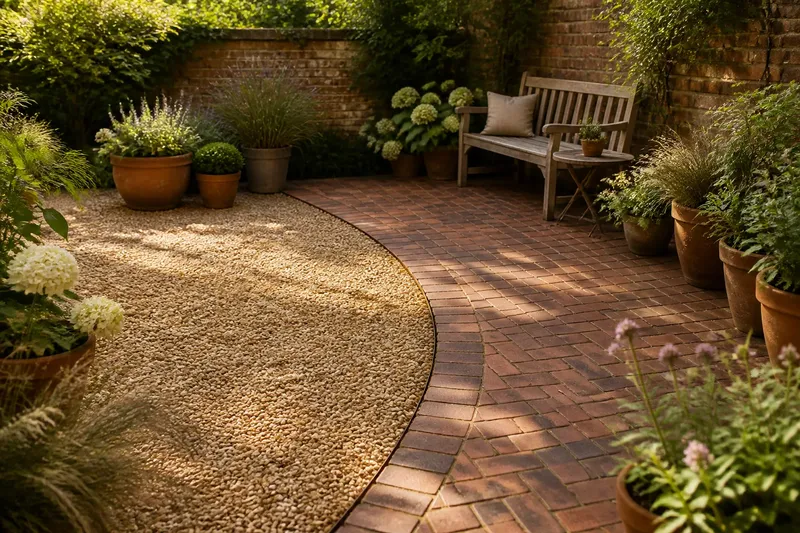
What should a garden surface say before anyone notices the planting? Garden surface design starts with that choice: gravel can suggest informality and movement, while brick can make a space feel settled and deliberate. Texture, color, pattern, and the way a material meets its edges all contribute.
Surface and character
A ground surface is one of the largest uninterrupted materials in a garden. Its color can warm or cool the view, and its texture affects how light falls across it. Choose it as part of the garden’s character, while accounting for access, drainage, and upkeep.
Materials carry familiar associations, but they are not rules. Loose gravel can feel casual or quiet; brick often feels domestic and established; crisp concrete may appear restrained. Planting, walls, and neighboring surfaces can change the impression.
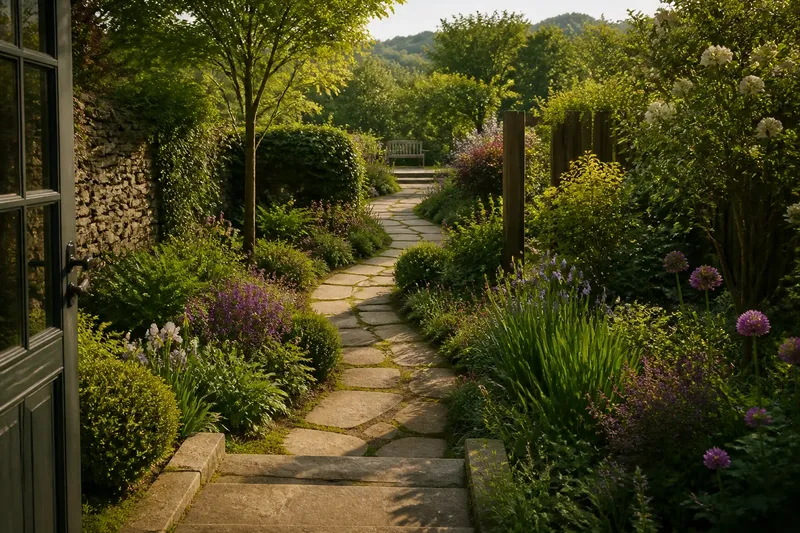
A repeated brick pattern, a gravel-to-stone transition, or a visible joint can make the ground part of the garden’s visual language. The aim is to give the space character without making the surface compete with everything above it.
Gravel texture and movement
Gravel’s character depends on its shape, size, and color. Rounded pebbles catch light differently from angular crushed stone, while pale aggregate makes a brighter field than dark stone. Fine, even textures tend to recede; varied sizes or strong color contrast draw attention downward.
Consider the material beside its surroundings. Warm, buff stone may sit comfortably with brick or timber, while cool gray aggregate can support a quieter palette of foliage and masonry. A loose surface also shifts and makes sound underfoot, which may suit a relaxed sitting area but can hinder wheeled access or provide an unstable base for containers. If those uses matter, consider a stabilized system or a firmer material.
Brick pattern and rhythm
Brick provides a more controlled surface, but its pattern still sets a mood. Running bond gives the eye a steady rhythm; basket weave feels more decorative; herringbone adds directional energy. Choose a pattern that fits the space rather than borrowing a formal look that feels out of place.
Brick color and joint tone matter too. Pale mortar makes individual bricks stand out, while a closer-toned joint softens the grid. Varied or weathered brick can feel less uniform, but too many competing tones may make a small sitting area busy.
Say you have a compact courtyard, a plain brick wall, and leafy containers. A running bond in a tone related to the wall could make the floor feel settled; a contrasting border could define the sitting area. The result to look for is a clear, calm field beneath the pots, not a pattern that pulls attention from them.
Transitions and edges
Where one surface ends is part of its design. A metal edge can keep gravel distinct from planting, while a brick soldier course can frame paving. An irregular meeting can feel softer, but it should look intentional rather than unfinished.
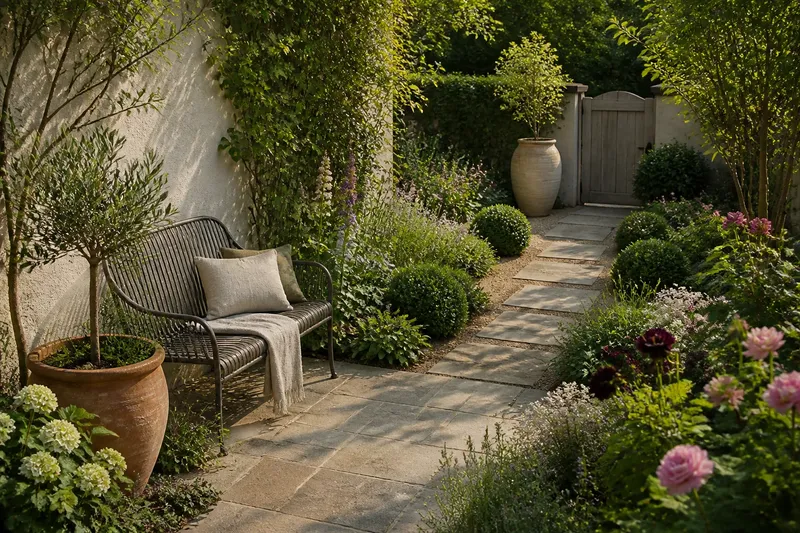
A narrow cobble band between paving and a wall can create a visual pause. A sudden shift from pale gravel to dark stone becomes a stronger accent. Use a change in material when it clarifies a boundary or adds a useful contrast, not just to introduce another sample.
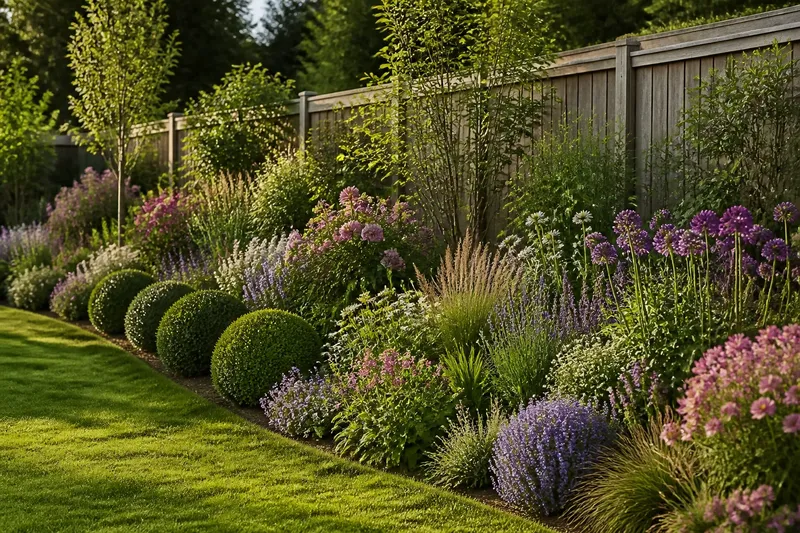
Not every edge needs a special detail. A small garden can become fussy if every surface gets a border, contrasting strip, or decorative insert. One clear material change is often enough to make the ground’s structure legible.
Garden surface design questions?
Which surface suits a relaxed garden?
Gravel can support an informal mood, especially when its color relates to nearby stone, brick, or foliage. Choose a texture that suits how people will use the area, and consider a firmer option if loose aggregate would make access difficult.
Does brick always look formal?
No. Varied brick, a simple pattern, and informal planting can make it feel settled rather than rigid. Joint color and surrounding materials also shape the impression.
How should I compare garden surface materials?
Set the options beside the wall, edging, and planting that will meet them, then consider how each choice affects the material’s pattern, color, and boundaries. Focus on the design relationship between surfaces rather than trying to judge a small sample as a miniature version of the finished area.
What should I check before choosing?
Consider access, drainage, upkeep, local weather, product instructions, and applicable local rules. If installation could affect safe access or drainage near a building, ask a qualified professional to assess the site.
Selection checks
Write down the impression you want the ground to create—quiet, warm, crisp, or informal—then compare materials against that intention and the space’s practical demands.
- Check whether the surface color relates to the nearest wall and edging; if it does, keep it in consideration, but if it clashes, choose a different tone.
- Check whether the pattern draws attention away from the planting; if it does, choose a simpler layout, but if it supports the space, keep the pattern.
- Check whether loose aggregate would hinder access; if it would, choose a stabilized system or firmer material, but if it would not, retain gravel as an option.
- Check whether gravel could spill into the planting bed; if it could, add a clear edge, but if the boundary is already contained, leave out extra edging.
- Check whether the material already has enough visual detail; if it does, skip a border or accent, but if the edge needs definition, add one restrained detail.
- Check whether the proposed surface could alter drainage near a building; if it could, pause and consult a qualified professional, but if it does not raise that concern, continue checking the product instructions and local requirements.
Garden surface design works best when the material sets the right tone and suits the space’s everyday use. Let gravel, brick, or paving carry the character; add a border or pattern only when it gives the garden a clearer structure.